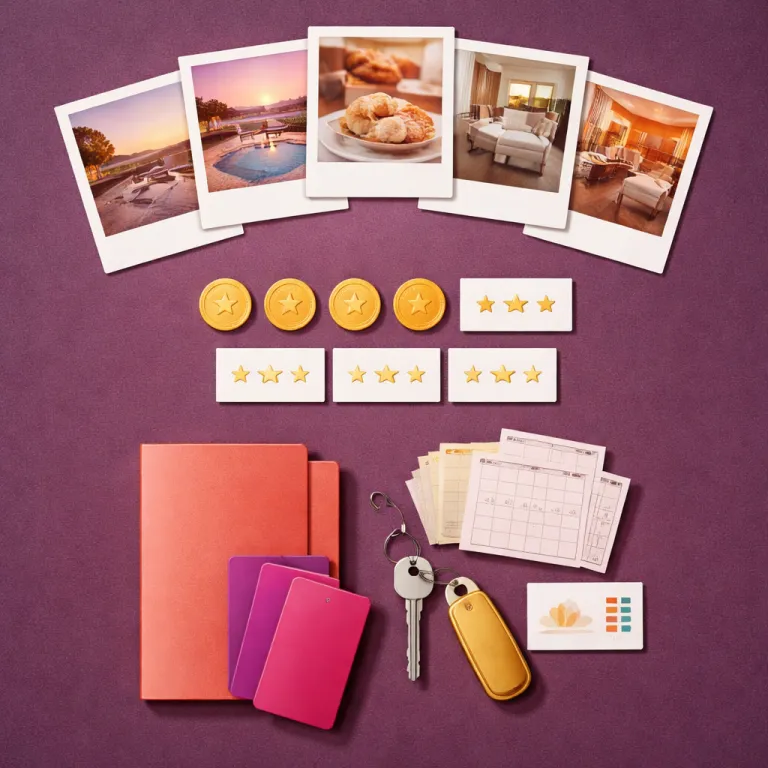
The new social proof hotels funnel: from scroll to sold room
For social proof hotels, the real battleground is no longer the OTA search page but the social feed where potential guests first pause on a stay. When 61 % of travellers say they booked a property they first saw on Instagram and 37 % via TikTok, the hospitality industry can no longer treat social media as a brand vanity channel disconnected from booking decisions. The question for revenue leaders is simple yet brutal : which specific posts, guest reviews and user generated clips are actually moving people from casual scroll to direct bookings.
Social proof in hotels is not an abstract concept ; it is the operational use of guest reviews to influence potential bookings and to convert social attention into measurable revenue. Data from Hotel Online shows that 95 % of travellers read online reviews before they book, while OtelCiro reports that higher ratings correlate with an 18 % increase in bookings, which means every point of reputation is a pricing lever as real as ADR. In this context, social proof hotels strategies must align review platforms, social media posts, and generated content into one funnel where each stage has a clear KPI, from saves and shares to completed payment on the booking engine.
At the top of this funnel sit social media discovery moments where guests encounter hospitality brands through Reels, TikToks, Shorts or tagged posts from micro influencers and regular user accounts. In the middle, consideration is shaped by the hotel Instagram grid, Stories highlights, online reviews and on site customer reviews that validate or contradict the glossy content. At the bottom, conversion happens when a potential guest clicks a tracked link, lands on a page rich in guest reviews testimonials and social proof, and then completes a reservation that your CRM can attribute back to a specific post or user generated asset.
Stage one – discovery: what really earns the first save
Discovery for social proof hotels now starts with vertical video where the first two seconds either hook people or lose them. The content that works is rarely a slow pan of an empty lobby ; it is usually a guest walking into a room, opening the curtains to a real view, or reacting authentically to a surprising amenity while the location tag and hotel name appear immediately. This kind of user generated clip functions as live proof that the property exists, that real guests stay there, and that the guest experiences match the promise made in more polished marketing efforts.
For Responsables e réputation and marketing directors, the priority at this stage is to engineer more of these moments without turning them into scripted ads that feel like inappropriate content. That means briefing micro influencers and loyal guests to capture short, context rich ugc where the neighbourhood, the room category and the price range are obvious, because potential guests use these cues to pre qualify a stay long before they read detailed reviews. Hotels that encourage guests to tag the property, use a branded hashtag and post within a limited time after check in create a steady flow of generated content that algorithms reward with reach and that future guests treat as early stage social proof.
From an attribution perspective, every discovery asset in social media should carry clean UTM parameters and be logged in a simple spreadsheet or API connected dashboard. When a guest post or creator video starts to generate saves, shares and profile visits, the revenue équipe can then correlate that spike with later direct bookings from the same market or device cohort, instead of guessing which social posts influenced which booking decisions. For a deeper framework on how trusted reviews and maps shape early stage perception, the analysis on how a Sabi Sands style of thinking reshapes trusted reviews in hospitality offers a useful mental model for mapping discovery touchpoints.
Stage two – consideration: saved posts, utility and honest flaws
Once people have seen a property in their feed, the next test for social proof hotels is whether the profile and website justify a save. At this consideration stage, potential guests scrutinise the hotel owned grid, Stories highlights, pinned posts and online reviews to decide if the brand feels trustworthy enough to warrant serious planning. They are not just looking for pretty content ; they want proof that the guest experiences shown in social media match the customer reviews they read on third party platforms.
Content that earns saves tends to offer practical utility rather than pure aspiration, such as room type reveals that show both the best angles and small flaws, neighbourhood guides that help guests plan a 48 hour stay, or back of house stories that humanise the hospitality équipe. When these posts are paired with embedded guest reviews testimonials, short quotes from online reviews and clear responses from hotel management, they create a bridge between social proof and operational reality that builds deep trust. This is where social proof hotels can turn user generated and brand generated content into a coherent narrative that reassures potential guests who are comparing several hospitality brands at once.
Reputation leaders should also integrate more nuanced trust storytelling, learning from analyses such as how the legend of Jacques St Germain reshapes trust, reviews and reputation in hospitality. That kind of thinking reminds us that online reviews, social posts and guest reviews do not exist in isolation but in a wider culture of stories people tell about a hotel and its city. At this stage, every response to user comments, every clarification about inappropriate content and every transparent reply to a negative guest review becomes part of the social proof that either accelerates or stalls booking decisions.
Stage three – conversion: from social proof to direct bookings
Conversion is where many social proof hotels strategies quietly fail, because the path from a saved post to a completed reservation is often broken or untracked. A potential guest might love the ugc they see, read several online reviews, and still end up booking through an OTA because the direct link in bio is missing, slow or generic. For revenue and commercial directors, fixing this last mile is usually the fastest way to turn social media engagement into measurable ADR and RevPAR gains.
The conversion stack for social proof hotels should include a clear direct booking link in bio, deep links from Stories and Reels, and TikTok or Instagram Shopping style tags for packages where available. Each of these links must carry UTM parameters tied to specific creators, campaigns or user generated cohorts, plus unique promo codes that allow the revenue équipe to reconcile social traffic with direct bookings in the PMS and CRM. On the landing page, a dynamic carousel of guest reviews testimonials, recent customer reviews and real time booking notifications acts as visual social proof that reassures hesitant guests who are about to enter their card details.
Hotels that want to go further can create segmented offers for social audiences, such as a limited time upgrade for people who arrive via a specific post or micro influencer code, while still protecting rate integrity on third party channels. The key is to treat every piece of generated content as a potential acquisition asset whose performance will be reviewed monthly with the revenue team, not as a vanity metric. For a concrete example of how a single viral guest experience can reshape perception and bookings when the brand stays silent, the case study on virtual check in going viral and the cost of silence is essential reading for any hospitality industry leader.
Attribution mechanics: proving that UGC sells rooms
Attribution is where social proof hotels either gain budget credibility or remain stuck as a soft branding line in the marketing plan. To convince finance and ownership, Responsables e réputation must show how specific user generated assets, guest reviews and social posts contribute to revenue, not just reach. That requires disciplined UTM hygiene, promo code design and monthly reconciliation between social media dashboards and revenue management reports.
Every piece of generated content that the hotel amplifies, whether from micro influencers or regular guests, should be tagged with a campaign name, source and medium that match the naming conventions used by the revenue équipe. When a potential guest clicks from a user generated post, lands on the booking engine and completes a reservation, that path must be visible in analytics so that marketing efforts can be optimised around the ugc that actually converts. Over time, patterns will emerge showing which creators, formats and guest experiences drive higher value direct bookings and which only generate social buzz without revenue impact.
Attribution also extends to review platforms, where social proof hotels can track how changes in online reviews scores or response strategies correlate with shifts in booking decisions and channel mix. The dataset reminds us that “What is social proof in hotels?” and “Why are hotel reviews important?” are not academic questions but operational ones, because “They build trust and influence booking decisions.” When teams align on this, they start to treat guest reviews, customer reviews and reviews testimonials as performance media that deserve the same analytical rigour as paid campaigns, including A B testing of response styles and measurement of how quickly resolved complaints reduce inappropriate content and improve future ratings.
Operational playbook: governance, safeguards and scaling social proof
For social proof hotels to sustain performance, governance around content, moderation and response must be as robust as the creative ideas. Hospitality brands need clear playbooks that define who can repost user generated assets, how to handle inappropriate content, and when to escalate guest complaints that surface first on social media rather than through traditional channels. Without this structure, even the best ugc strategy will collapse under the weight of inconsistent replies and missed service recoveries.
A practical framework starts with mapping all touchpoints where guests and potential guests can leave reviews, from OTAs and Google to Instagram comments and TikTok stitches, then assigning ownership for each platform. The same équipe that manages online reviews should coordinate with operations to ensure that recurring issues identified in guest reviews lead to real fixes, because it is not the review score but the operational change that moves the breakfast rating from 3.8 to 4.6 in one quarter. When hotels encourage guests to share their experiences, subscribe to newsletters and post feedback directly after stay, they create a virtuous loop where generated content feeds continuous improvement and where social proof reflects genuine service upgrades.
Scaling this approach also means training front line staff to recognise when a guest is filming content that could become powerful social proof, and to respond with service gestures that respect privacy while still supporting authentic storytelling. Some properties even invite selected guests to short ugc workshops during a limited time window, explaining how their user generated clips will be credited and how promo codes work, which deepens trust and reduces the risk of misunderstandings. Across all of this, the goal is to ensure that social proof hotels strategies remain human centric, grounded in real guest experiences and aligned with the core promise of hospitality, rather than chasing every new media trend without a clear link to revenue and reputation.
FAQ – social proof and UGC in hotel reputation strategy
What is social proof in hotels ?
Social proof in hotels is the use of guest reviews, ratings, testimonials and user generated content to influence potential bookings by showing how real people experienced the property. It includes online reviews on OTAs and Google, social media posts from guests, and on site customer reviews displayed on the hotel website. In the dataset terms, “What is social proof in hotels?” is answered simply as “Use of guest reviews to influence potential bookings.”
Why are hotel reviews important for revenue teams ?
Hotel reviews are important because they build trust and directly influence booking decisions, which affects occupancy, ADR and channel mix. With 95 % of travellers reading reviews before booking and higher ratings linked to an 18 % increase in bookings, review scores become a measurable revenue lever. For revenue and commercial directors, integrating review data into pricing and distribution strategies is now as critical as monitoring competitor rates.
How can hotels improve their social proof across platforms ?
Hotels can improve social proof by systematically collecting guest reviews, responding to feedback, and displaying testimonials and ratings on their own channels and on third party platforms. Encouraging guests to share user generated content on social media, then curating the best posts on the website and in email campaigns, reinforces trust at every stage of the funnel. The dataset summarises this approach clearly : “How can hotels improve social proof? By collecting and displaying positive guest feedback.”
What role does user generated content play in booking decisions ?
User generated content plays a central role because travellers trust it 2.5 times more than brand created content and Gen Z relies heavily on UGC video for purchase decisions. Short form clips, guest reviews and authentic photos help potential guests validate whether the hotel matches their expectations more than polished marketing visuals alone. When this generated content is linked to tracked booking paths, hotels can prove its impact on direct bookings and allocate budget accordingly.
How should hotels handle inappropriate content in reviews or social posts ?
Hotels should have clear moderation guidelines that distinguish between negative but legitimate guest feedback and truly inappropriate content that violates platform rules or legal standards. Legitimate complaints deserve prompt, empathetic responses and operational follow up, while harmful or abusive posts should be reported through the correct channels and documented internally. Transparent handling of both types reinforces trust among guests, staff and potential guests who are watching how the brand behaves under pressure.