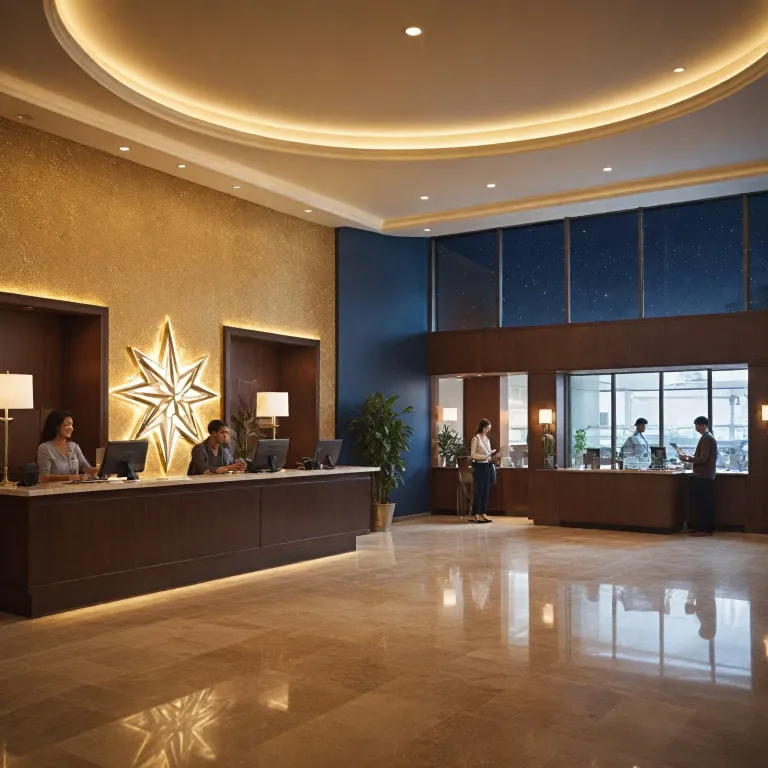
Reputation stakes for a budget brand like super 7 inn
For a budget chain such as super 7 inn, online reputation is not a cosmetic issue but a survival factor. In a segment where every inn competes on price and basic comfort, the average rating on major platforms becomes a proxy for safety, cleanliness, and predictability for travelers. When guests read reviews, they are not only judging one room but extrapolating to all rooms in the chain across different cities.
Reputation managers must therefore treat each room review as a micro KPI that influences the global rating average and the perceived value of every queen bed or king bed sold that night. A one star drop in rating can push the brand out of the top results for budget inns in a given city, especially when guests filter by top attractions or by distance in miles from a park or business district. For super 7 inn, which positions itself as a budget friendly inn with essential amenities like air conditioning and basic room service in some locations, this visibility directly impacts occupancy and RevPAR.
Because the chain operates in multiple U.S. cities, the same brand promise must feel consistent whether the guest stays in wright city or another roadside location close to a highway. Guests expect that a king room in one super inn will feel similar to a king room in another, with comparable beds, cleanliness, and noise levels. When the rating average diverges significantly between properties, platforms highlight these gaps and undermine the sense of a unified brand.
For hospitality groups and independents alike, the lesson is clear ; budget does not excuse mediocre reputation management. A carefully managed review strategy can turn a simple inn into a trusted choice close to key attractions, even when the décor is modest and the food restaurant options rely heavily on nearby fast food. The challenge is to orchestrate reviews, responses, and operational improvements so that every room read by potential guests reinforces trust rather than doubt.
From fragmented reviews to a structured reputation strategy
Many budget properties still treat online reviews as isolated complaints instead of structured data that can guide investment decisions. For super 7 inn, a chain with standardized rooms and essential amenities, every comment about a queen bed, air conditioning, or parking can be coded and tracked across locations. Reputation and marketing teams can then correlate the rating average with specific operational levers such as cleaning protocols, staff responsiveness, or noise insulation.
Responsables e-réputation and customer care leaders should build a taxonomy that distinguishes between room issues, service failures, and environmental factors like nearby attractions or traffic noise. When a guest writes that the inn is close to top attractions or that attractions nearby feel unsafe after dark, these nuances must be tagged differently from complaints about the bed or the bathroom. Over time, this structured approach allows super 7 inn to benchmark each city, each park adjacent property, and each wright city location against chain wide standards.
Platforms of trust increasingly reward properties that respond quickly and transparently to feedback, especially when guests read view threads before booking. A professional response that explains how the team will check availability of quieter rooms or adjust room service hours can turn a negative room read into a demonstration of accountability. For reputation managers, this is where expertise in tone, timing, and escalation becomes as important as traditional marketing.
To choose where to focus their efforts, leaders can rely on guidance about the best site for verified hotel reviews and reputation strategies, as explained in this resource on selecting the best site for verified hotel reviews. For a chain like super 7 inn, concentrating on a few high trust platforms where guests actually read and compare inns is more effective than spreading thin across dozens of minor sites. This disciplined approach helps align marketing, operations, and guest expectations around a coherent narrative of value and reliability.
Designing review journeys around context, not only around rooms
Guests rarely evaluate a stay at super 7 inn in isolation from their travel purpose and the surrounding environment. A family stopping in wright city on a long drive will judge the inn partly by how many miles it sits from the highway, how easy the parking feels at night, and whether there are fast food or casual dining options within walking distance. Business travelers, by contrast, may care more about quiet rooms, reliable air conditioning, and a comfortable queen bed or king bed for a short night before meetings.
Reputation leaders should therefore map review journeys by segment, identifying which aspects of the room and the inn matter most for each profile. For leisure guests focused on top attractions, the proximity to a park, museums, or city center will heavily influence the rating average and the likelihood of positive comments about attractions nearby. For pet owners, policies about animals, green spaces close to the inn, and the clarity of information at check in will shape both the rating and the narrative in reviews.
Insights from industry events on trusted reviews, such as those discussed in this article on how conferences shape the new era of trusted reviews, show that context rich feedback is becoming a key differentiator. Guests increasingly expect to read view details about noise levels, coffee spots, and dining coffee options before they check availability. For super 7 inn, encouraging guests to mention whether the inn is close super to a business park or to family friendly attractions can help future travelers self select more accurately.
By designing post stay surveys that prompt for specific elements such as room type, bed comfort, and nearby dining or coffee spots, the chain can generate more actionable data. This allows marketing teams to highlight, for example, that certain locations offer a king room with better soundproofing or that some inns sit within a short walk of top attractions and quality food restaurant choices. Over time, this context driven approach strengthens both the credibility of the rating average and the perceived transparency of the brand.
Turning budget constraints into a transparency advantage
Budget brands like super 7 inn cannot compete with luxury properties on design, amenities, or extensive room service menus. However, they can outperform many higher priced competitors on clarity, honesty, and the intelligent use of reviews to set accurate expectations. When guests read that an inn offers simple rooms with clean beds, functional air conditioning, and convenient parking close to the entrance, they are less likely to feel misled.
For reputation managers, the objective is to align the narrative across platforms so that the rating average reflects a fair trade off between price and comfort. This means encouraging guests to specify whether they stayed in a queen bed room, a king room, or a basic room with twin beds, and to comment on what worked rather than only what failed. When multiple reviews mention that the inn is close super to a specific park or that attractions nearby are easy to reach by car within a few miles, the perceived value of the location increases.
Transparency also extends to ancillary elements such as breakfast, coffee, and dining options. If a property does not have a full food restaurant, it should clearly state that guests will rely on nearby fast food or informal dining coffee spots, while perhaps offering complimentary coffee in the lobby. By inviting guests to read view details about these aspects and by responding candidly to critiques, super 7 inn can turn potential weaknesses into signals of honesty.
In this context, reputation leaders should pay attention to specialized guidance on how reliable review sites empower specific segments, such as pet owners, as explained in this article on reliable review sites for pet friendly hotels. The same principles apply to budget travelers, who value clear information about room types, beds, and services more than polished marketing language. When managed well, this transparency can elevate a modest inn into a trusted reference point within its city.
Operationalizing feedback across multiple super 7 inn locations
Because super 7 inn operates several locations across the United States, consistency becomes a central pillar of reputation management. A guest who has a positive experience with a queen bed and quiet room in one city will expect a similar standard when booking another inn under the same brand. If the rating average varies widely between properties, platforms will expose these discrepancies and erode the chain’s perceived reliability.
To avoid this, groups and independents managing multiple properties should implement a centralized e-réputation dashboard. This system aggregates every room read, beds read comment, and rating into a unified view, allowing leaders to spot patterns such as recurring complaints about air conditioning or praise for generous parking layouts. When a particular wright city property underperforms, managers can benchmark it against top performing locations that are close to similar attractions or park areas.
Standard operating procedures should then translate these insights into concrete actions at property level. For example, if several reviews mention that a king bed feels worn or that a king room faces noisy city traffic, maintenance and allocation rules can be updated. Staff can be trained to proactively offer quieter rooms, explain parking options, or highlight nearby dining coffee and coffee spots that guests consistently appreciate.
At the same time, marketing teams can refine content on booking platforms to emphasize strengths validated by guests, such as proximity to top attractions, ease of access within a few miles, or reliable basic room service where available. By closing this loop between feedback, operations, and communication, super 7 inn can gradually raise the rating average across all inns. This disciplined approach demonstrates to platforms of trust that the brand treats reviews as a strategic asset rather than a public relations burden.
Measuring what matters in ratings, reviews, and guest narratives
For reputation and marketing leaders, the challenge is not only to collect reviews but to interpret them with nuance. A raw rating average hides important differences between a complaint about a noisy city street and a serious issue with cleanliness or safety in a room. Super 7 inn must therefore go beyond star ratings and analyze the language guests use when they read view and write about their stays.
Text analytics can help identify recurring themes related to beds, room size, air conditioning performance, or the convenience of parking and check in. When multiple guests mention that the inn is close super to a specific park, that attractions nearby are easy to reach, or that coffee spots and dining coffee options are limited, these patterns should inform both investment and messaging. Over time, this granular understanding allows the chain to prioritize upgrades that will most improve the rating average and guest satisfaction.
It is equally important to track how different room types perform in reviews. A queen bed room facing a quiet courtyard may consistently receive higher ratings than a king room overlooking a busy road, even within the same inn. By segmenting feedback by room category, super 7 inn can adjust pricing, allocation, and descriptions so that guests choose the option that best matches their expectations.
Finally, reputation leaders should remember that guests compare budget properties not only on price but also on perceived fairness and responsiveness. When a guest writes, “Amenities often include free Wi-Fi, air conditioning, and in-room appliances like microwaves and refrigerators.”, they are setting a baseline expectation for every inn in the chain. Meeting and communicating around this baseline, while being transparent about limitations such as reliance on nearby fast food instead of a full food restaurant, is essential to building long term trust.
Key quantitative insights for reputation and review strategies
- Super 7 Inn currently operates approximately 6 locations across the United States, giving reputation teams a manageable yet meaningful network for cross property benchmarking.
- Standard check in typically starts at 15:00, while check out is usually set at 11:00, which should be clearly communicated in all room descriptions and pre arrival messages.
- Most locations provide essential amenities such as free Wi-Fi and air conditioning, which should be consistently highlighted in listings to align with guest expectations.
- Policies regarding pets and additional fees vary by property, so reputation managers must ensure that each inn’s specific rules are visible before guests check availability.
- Online booking platforms and direct phone reservations remain the primary booking channels, making the accuracy of information and reviews on these platforms critical for conversion.
Frequently asked questions about reviews, ratings, and trusted platforms
What amenities are typically highlighted in reviews of super 7 inn ?
Guests most often mention core amenities such as free Wi-Fi, air conditioning, and simple in room appliances like microwaves and refrigerators. These basics strongly influence the rating average because they shape comfort for both short and long stays. Reputation managers should ensure that these amenities are reliably available and clearly described for every inn and every room type.
How should reputation teams handle varying pet policies across locations ?
Because pet policies differ between properties, each super 7 inn must state its rules clearly on booking platforms and in pre stay communications. Reputation leaders should encourage staff to explain any deposits, size limits, or restricted areas when guests check in with animals. Transparent information reduces negative reviews and helps guests read view policies accurately before they travel.
What is the best way to encourage more detailed guest reviews ?
Post stay emails can invite guests to comment on specific aspects such as bed comfort, room cleanliness, noise levels, and nearby attractions or dining options. By asking targeted questions about queen bed or king bed experiences, parking convenience, and coffee spots, super 7 inn can generate richer feedback. These details help future travelers read and interpret reviews more effectively when they check availability.
How can budget hotels compete on reputation with higher end properties ?
Budget brands like super 7 inn can focus on reliability, cleanliness, and honest communication rather than luxury amenities. When guests consistently find that rooms match descriptions, that air conditioning works, and that parking feels safe, they reward the inn with strong ratings. Over time, this perceived fairness can position a modest property as a top choice near key attractions in its city.
Why is it important to monitor multiple review platforms rather than only one ?
Different guest segments favor different platforms, so relying on a single site can distort the rating average and the perceived reputation of an inn. Reputation managers should track all major channels where travelers read and write reviews, ensuring consistent information and responses. This multi platform vigilance helps super 7 inn maintain a coherent brand image across cities, miles, and guest profiles.
